
Study Tips
Evidence-based study methods: active recall, spaced practice, note-taking, focus and motivation.
- All 439
- AI & Future Skills 39
- Coding & Software 31
- Data, Cloud & Security 16
- Digital Marketing & Design 17
- Careers, Freelancing & Business 27
- Kids & STEM 14
- For Parents 44
- Finance & Professional Exams 10
- Mental Health & Wellbeing 33
- Study Tips 121
- Exam Prep 36
- Guides 35
- Languages 16
 Study Tips
Learning Styles: What the Evidence Actually Says
The idea that students are visual, auditory or kinaesthetic learners is one of education's most persistent myths. Here's what research finds, and what to do instead.
 Study Tips
How to Write History Essays That Argue
History essays reward argument, not narrative. How to build a case, use evidence properly, and reach a judgement.
 Study Tips
How to Write a Strong Sociology Essay
Sociology essays reward theory, evidence and evaluation together. How to use perspectives, apply studies, and weigh arguments to a judgement.
 Study Tips
How to Write a Reflective Essay
Reflective writing explores your own experience and learning. How it differs from other essays, and how to reflect with genuine depth.
 Study Tips
How to Write a Strong Narrative in an Exam
Exam stories reward control, not ambition. Why a small, focused narrative beats an epic, and how to craft one under time pressure.
 Study Tips
How to Write a Good Lab Report
Lab reports follow a clear structure for a reason. What each section is for, how to write it well, and the common mistakes that lose marks.
 Study Tips
How to Write an Introduction That Sets Up Your Argument
A good introduction does real work — it states your position and signposts the essay. How to write one that isn't just throat-clearing.
 Study Tips
How to Write a Strong Geography Essay
Geography essays need case studies, structure and evaluation. How to use real examples well and reach the judgement higher marks require.
 Study Tips
How to Write a Film or Media Analysis
Media analysis reads images and sound the way English reads text. The key techniques to notice, and how to link them to meaning and audience.
 Study Tips
How to Write a Discursive Essay
A discursive essay explores a topic in a balanced way. How it differs from an argument, how to structure it, and how to stay even-handed.
 Study Tips
How to Write a Conclusion That Actually Concludes
Weak conclusions just repeat the introduction. How to end an essay with a genuine judgement that leaves the reader convinced.
 Study Tips
How to Write a Comparison Essay
Comparison essays fail when they describe two things separately. How to genuinely compare, using linking language and a structure that interweaves.
 Study Tips
How to Use Mind Maps for Revision (Properly)
Mind maps are excellent for seeing how a topic connects — and useless as decoration. Here's how to use them so they teach rather than just look tidy.
 Study Tips
How to Understand Waves in Physics
Waves carry energy without carrying matter. The key quantities, the difference between transverse and longitudinal, and how the wave equation ties them together.
 Study Tips
How to Understand Vectors
Vectors carry both size and direction. What that means in practice, how to add and scale them, and why they matter in physics and beyond.
 Study Tips
How to Understand Trigonometry (Not Just Memorise It)
SOHCAHTOA is a start, not the whole subject. What sine, cosine and tangent actually measure, and how to stop guessing which one to use.
 Study Tips
How to Understand Trigonometric Identities
Trig identities look like a wall of formulae. How to understand where the key ones come from, and how to use them to simplify and prove.
 Study Tips
How to Understand and Perform Titrations
Titration is a precise technique with predictable exam questions. What it's for, how to do it accurately, and how the calculations work.
 Study Tips
How to Understand the Water Cycle
The water cycle links evaporation, rainfall and rivers into one system. The key processes, how they connect, and why the detail matters at GCSE and beyond.
 Study Tips
How to Read and Understand the Periodic Table
The periodic table is organised so that position predicts behaviour. What groups and periods tell you, and how to use patterns instead of memorising.
 Study Tips
How to Understand the Nitrogen Cycle
The nitrogen cycle looks intimidating with its many stages. How to follow the flow, what each process does, and how to remember it.
 Study Tips
How to Understand the Nervous System
The nervous system carries signals around the body. How it is organised, how neurons transmit, and how reflexes work — explained clearly.
 Study Tips
How to Understand the Human Heart and Circulation
The heart and circulatory system confuse students with their detail. How the double circulation works, what each part does, and how to remember it.
 Study Tips
How to Understand the French Revolution
The French Revolution is complex and often studied. How to grasp its causes, key phases and significance without getting lost in detail.
 Study Tips
How to Understand the Cold War
The Cold War spans decades and continents. How to grasp its nature, key phases and causes without drowning in events.
 Study Tips
How to Understand the Carbon Cycle
The carbon cycle moves carbon through air, life and earth. The key processes, how they balance, and why human activity disturbs it.
 Study Tips
How to Understand the Supply Side of the Economy
Supply-side policy aims at the economy's productive capacity. What it means, how it differs from demand-side, and the debates around it.
 Study Tips
How to Understand Supply Chains in Business
A supply chain links raw materials to the customer. What the stages are, why they matter to a business, and the trade-offs involved.
 Study Tips
How to Understand Supply and Demand
Supply and demand is the foundation of economics. What the curves really show, why they move, and how price finds its balance.
 Study Tips
How to Understand Statistical Significance
Statistical significance is widely used and widely misunderstood. What it actually means, what it does not, and how to interpret a p-value honestly.
 Study Tips
How to Understand Standard Form
Standard form handles very large and very small numbers neatly. What it means, how to convert to and from it, and how to calculate with it.
 Study Tips
What Standard Deviation Actually Measures
Standard deviation is spread, not average. What it tells you, how to read it, and why it matters more than the mean alone.
 Study Tips
How to Solve Simultaneous Equations Graphically
Solving simultaneous equations by drawing shows what the answer means. How the intersection gives the solution, and when the method helps.
 Study Tips
How to Understand Shakespeare
Shakespeare feels impossible until the language clicks. How to get past the unfamiliar English and read for meaning, theme and character.
 Study Tips
How to Understand Respiration
Respiration releases the energy in food — and it isn't breathing. Aerobic versus anaerobic, the equations, and why every cell depends on it.
 Study Tips
How to Understand Research Methods in Psychology
Research methods underpin every psychology topic and appear throughout the exam. The key concepts, why they matter, and how to evaluate a study.
 Study Tips
How to Understand Ratio and Proportion
Ratios compare quantities; proportion keeps them in step. How to share amounts, scale recipes, and handle the questions that hide a ratio.
 Study Tips
How to Understand Rates of Reaction
Reaction rates depend on a few key factors, all explained by one idea. What controls how fast reactions go, and why collision theory ties it together.
 Study Tips
How to Understand Radioactivity
Radioactivity is unstable atoms releasing radiation. The types, what half-life means, and how to handle the calculations without fear.
 Study Tips
How to Understand Quadratic Graphs
The parabola shape carries a lot of information. How to read roots, the turning point and the line of symmetry, and sketch one reliably.
 Study Tips
How to Understand Probability Trees
Tree diagrams make multi-stage probability manageable. How to build one, what to multiply and add, and how to avoid the usual mistakes.
 Study Tips
How to Understand Probability Properly
Probability trips up students because intuition is unreliable. The rules that actually work, and the traps — like 'and' versus 'or' — that cost marks.
 Study Tips
How to Understand Poetic Form and Structure
Form and structure carry meaning, not just content. What to look for in a poem's shape, and how to write about it convincingly.
 Study Tips
How to Understand Plate Tectonics
Plate tectonics explains earthquakes, volcanoes and mountains. What drives the plates, what happens at their boundaries, and why it matters.
 Study Tips
How to Understand Photosynthesis
Photosynthesis is how plants make food from light. The equation, what each part does, and the factors that limit the rate.
 Study Tips
How to Understand Osmosis and Diffusion
These two transport processes confuse students constantly. What each moves, which direction, and the one distinction that keeps them straight.
 Study Tips
How to Understand the Normal Distribution
The bell curve appears everywhere in statistics. What it represents, why so much data fits it, and how to read it without fear.
 Study Tips
How to Understand Newton's Three Laws of Motion
Newton's laws sound simple and hide subtleties. What each law really says, the everyday examples that make them click, and the common misreadings.
 Study Tips
Moles in Chemistry: The Idea Everything Else Rests On
If moles never clicked, every calculation topic afterwards feels impossible. What a mole actually is, and how to use it without panic.
 Study Tips
How to Understand Memory in Psychology
Memory is a core psychology topic with competing models. The main models, key studies, and how to evaluate them for exams.
 Study Tips
How to Understand Market Structures
Market structures range from many small firms to a single dominant one. What the main types are, how they differ, and why the differences matter.
 Study Tips
Macroeconomics vs Microeconomics: The Difference
The two branches of economics ask different questions at different scales. What each covers, how they connect, and why students confuse them.
 Study Tips
How to Understand Macbeth
Macbeth is a set text for many students. Its key themes, how the main characters develop, and how to write about it for exams.
 Study Tips
How to Understand and Use Legal Cases
Case law is the backbone of legal study. How to read a case, extract the principle, and apply it — rather than memorising names.
 Study Tips
How to Understand Le Chatelier's Principle
This principle predicts how reversible reactions respond to change. What it says, how to apply it to conditions, and why it matters industrially.
 Study Tips
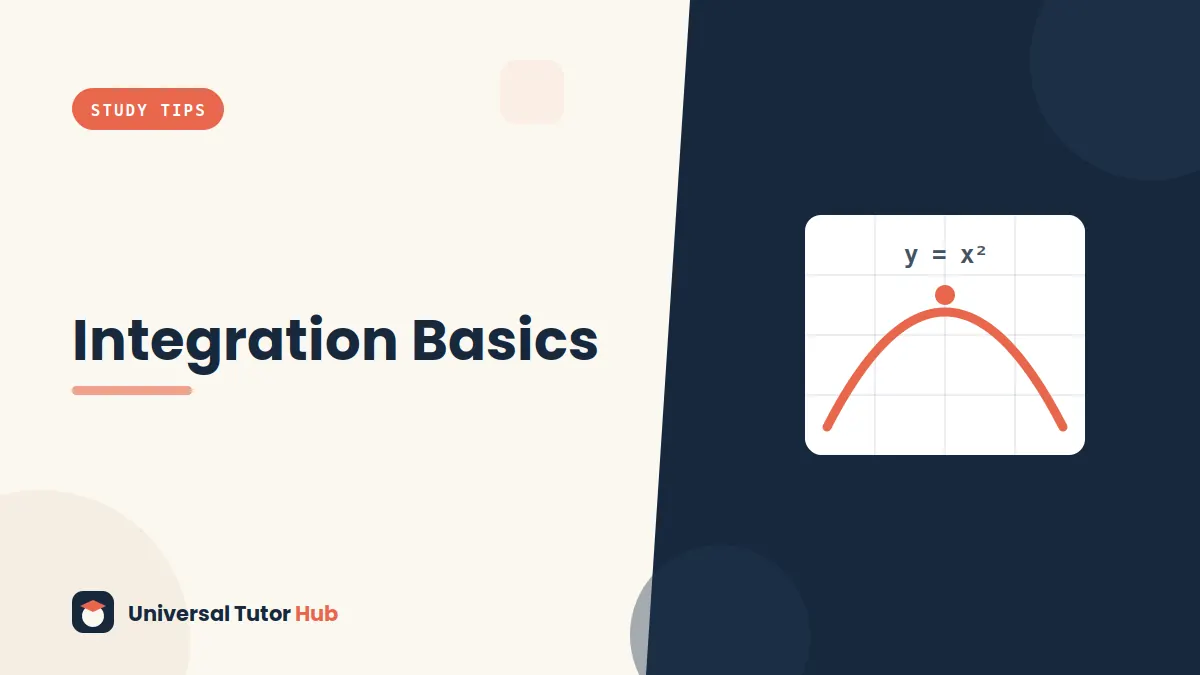
How to Understand the Basics of Integration
Integration reverses differentiation and finds areas. What it means, how it relates to differentiation, and the basic rule to start with.
 Study Tips
How to Understand Inflation
Inflation is rising prices, but the causes and effects are subtler. What drives it, who it helps and harms, and why governments target it.
 Study Tips
How to Understand Indices and Powers
The index laws look arbitrary until you see where they come from. What powers mean, why the rules work, and how to handle negatives and fractions.
 Study Tips
How to Understand Homeostasis
Homeostasis keeps the body's internal conditions stable. The general principle, how negative feedback works, and the key examples to know.
 Study Tips
How to Understand Graphs and Gradients
A straight-line graph packs a lot of information. What gradient and intercept mean, how to read y = mx + c, and what curves are telling you.
 Study Tips
How to Understand Genetics and Inheritance
Genetics has its own vocabulary that trips students up. The key terms, how inheritance works, and how to handle genetic cross questions.
 Study Tips
How to Understand GDP and Economic Growth
GDP measures the size of an economy, but it has limits. What it captures, what economic growth means, and what GDP leaves out.
 Study Tips
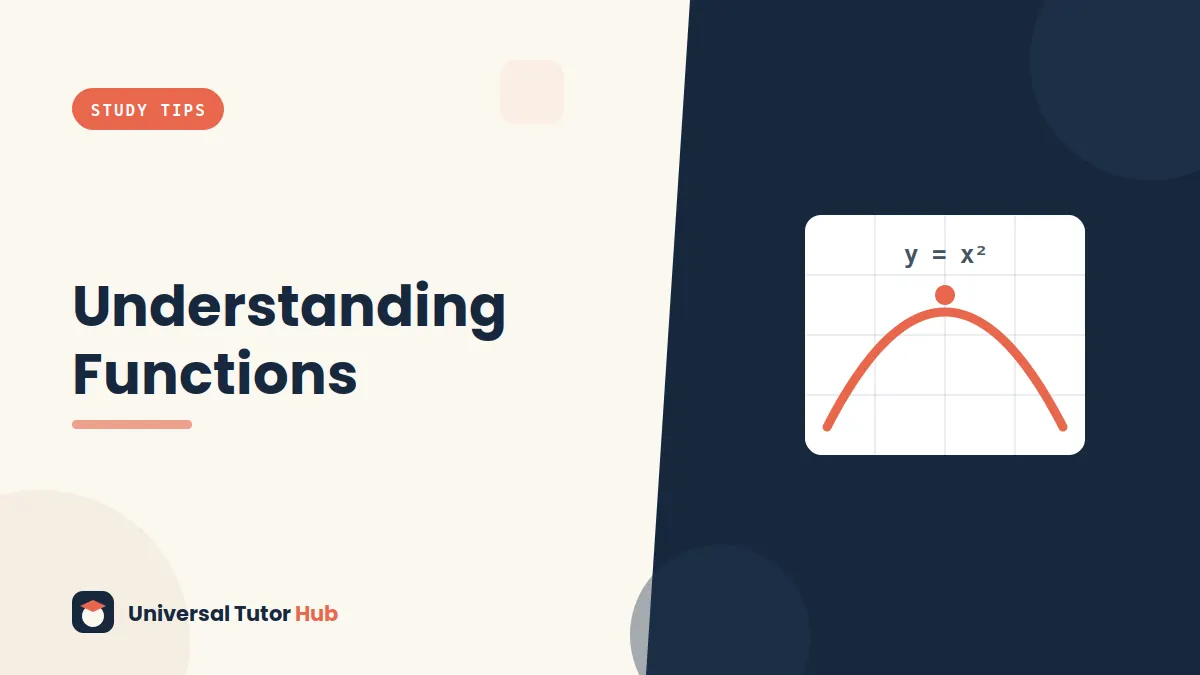
How to Understand Functions in Mathematics
Functions are a core idea running through maths. What a function really is, the notation, and how to think about inputs and outputs clearly.
 Study Tips
How to Understand Forces in Equilibrium
Equilibrium means balanced forces, but the details trip students up. What equilibrium really requires, and how to solve balance problems.
 Study Tips
How to Understand Evolution by Natural Selection
Natural selection is often misunderstood. The actual mechanism, the common misconceptions, and how to explain it clearly for exams.
 Study Tips
How to Understand Energy, Work and Power
Energy, work and power are related but distinct. What each means, how they connect, and why energy is never actually lost.
 Study Tips
How to Understand Electromagnetism
Electricity and magnetism are deeply linked. How a current makes a magnetic field, how that drives motors, and how to picture the invisible.
 Study Tips
How to Understand Electricity and Circuits
Current, voltage and resistance confuse students because they're invisible. A water analogy that works, plus the rules for series and parallel.
 Study Tips
How to Understand Elasticity in Economics
Elasticity measures how responsive one thing is to another. What price elasticity means, why it matters for firms and governments, and how to read it.
 Study Tips
How to Understand Ecosystems and Food Chains
Ecosystems link living things and their environment. How energy flows, what food chains and webs show, and why disruption spreads.
 Study Tips
How to Understand the Basics of Differentiation
Differentiation finds rates of change and gradients. What it really means, the basic rule, and how to get past the intimidating notation.
 Study Tips
How to Read and Interpret Climate Graphs
Climate graphs pack temperature and rainfall into one chart. How to read both axes, describe the pattern, and use the data in answers.
 Study Tips
How to Understand and Remember Circle Theorems
Circle theorems feel like a list to memorise. How to understand them, spot which applies, and build the reasoning exam questions want.
 Study Tips
How to Understand Chemical Bonding
Ionic, covalent and metallic bonding all come from one idea: atoms seeking full outer shells. How each works, and how bonding explains properties.
 Study Tips
How to Understand Cell Biology
Cells are the foundation of biology. What the key structures do, how animal and plant cells differ, and why the detail matters later.
 Study Tips
Understanding Calculus: What Differentiation Really Means
Calculus taught as rules is memorisable and meaningless. What differentiation and integration actually measure, in plain language.
 Study Tips
How to Understand Atomic Structure
Protons, neutrons and electrons — where they sit, what they do, and how electron arrangement drives every reaction you'll study.
 Study Tips
How to Actually Understand Algebra
Algebra stops making sense when letters are treated as magic. What the letters really mean, why the rules work, and how to fix the usual gaps.
 Study Tips
How to Understand Acids, Bases and pH
Acids and bases are a core chemistry topic. What the pH scale means, how neutralisation works, and the reactions you need to know.
 Study Tips
How to Take Notes That Are Actually Worth Reading
Why copying the board doesn't work, how the Cornell method fixes it, and how to write notes you'll actually use when revision starts.
 Study Tips
How to Study Alongside a Full-Time Job
Studying around work demands ruthless use of limited time. How to protect small windows, choose efficient methods, and stay sustainable.
 Study Tips
How to Study in a Group Effectively
Group study helps or wastes time depending on how it's run. How to make it productive, what it's good for, and when to work alone instead.
 Study Tips
How to Solve Simultaneous Equations (Both Methods)
Elimination or substitution — when to use each, why they work, and how to avoid the sign errors that cost most of the marks.
 Study Tips
How to Solve Quadratic Equations Three Ways
Factorising, the quadratic formula and completing the square — which to reach for, and how to know when each will actually work.
 Study Tips
How to Set Study Goals That Work
Vague goals like 'do better' don't guide action. How to set specific, achievable study goals that actually change what you do.
 Study Tips
How to Revise Two Subjects on the Same Day
Juggling subjects in one revision day can help or hinder. How to interleave subjects effectively, and avoid the confusion of switching badly.
 Study Tips
How to Revise for a Spelling or Vocabulary Test
Vocabulary and spelling tests reward the right practice. How to learn words so they stick, using methods that beat reading the list over.
 Study Tips
How to Manage a Heavy Study Workload
When everything feels due at once, overwhelm sets in. How to take control of a heavy workload, prioritise, and keep it sustainable.
 Study Tips
How to Make Flashcards That Actually Work
Most flashcards fail because they ask too much per card. Here's how to write cards that force real recall — and how to review them so they stick.
 Study Tips
How to Learn From Your Mistakes in Practice Exams
Doing past papers is only half the work — the learning is in the review. How to analyse your mistakes so you stop repeating them.
 Study Tips
How to Improve Your Vocabulary for Writing
A richer vocabulary lifts writing, but only if used well. How to build vocabulary that you can actually deploy, not just recognise.
 Study Tips
How to Improve Reading Speed and Comprehension
Reading faster is useless if you understand less. How to read more efficiently while keeping comprehension, and when slow reading is right.
 Study Tips
How to Evaluate in Essays (Across Every Subject)
Evaluation is where the top marks live in most essay subjects. What it actually means, and how to do it rather than just describing.
 Study Tips
How to Deal With a Bad Mock Result
A disappointing mock feels like a verdict. Why it isn't, what it's actually useful for, and how to turn it into improvement.
 Study Tips
How to Concentrate for Longer While Studying
Why your attention keeps breaking, how long focus realistically lasts, and the environment and habits that let you work for longer without forcing it.
 Study Tips
How to Catch Up After Falling Behind
Falling behind feels irrecoverable and rarely is. How to work out what you've actually missed, and rebuild in the right order.
 Study Tips
How to Build a Revision Schedule That You'll Actually Follow
Most revision timetables collapse within days. How to build one that survives contact with real life, and adjust it when it slips.
 Study Tips
How to Stop Procrastinating (Without Relying on Willpower)
Procrastination is usually about avoiding a feeling, not laziness. Here's what actually reduces it, from a two-minute start rule to removing the friction.
 Study Tips
How to Balance Chemical Equations (A Reliable Method)
Balancing equations is a systematic process, not trial and error. A method that works every time, and the rules students break without noticing.
 Study Tips
How to Approach Unseen Comprehension Questions
Comprehension tests reading skill under time pressure. How to read the text, find evidence, and answer different question types precisely.
 Study Tips
How to Analyse Language in English
Language analysis is more than spotting techniques. How to move from naming a device to explaining its effect, which is where the marks are.
 Study Tips
How to Analyse a Historical Source
Source analysis is a distinct history skill. How to weigh provenance, content and context to judge usefulness and reliability properly.
 Study Tips
How to Analyse a Business Case Study
Business case studies reward applying theory to the specific firm, not reciting it. How to read the case, apply concepts and reach a judgement.
 Study Tips
How to Write Strong Urdu Essays for O-Level and Matric
A practical guide to O-Level and Matric Urdu — essay structure, idiomatic expression, grammar accuracy, and how to prepare for comprehension and summary questions.
 Study Tips
How to Write Psychology Essays: Mastering AO3 Evaluation
A practical guide to psychology essay technique — the AO1/AO2/AO3 split, writing real evaluation, and turning knowledge of studies into top-band marks.
 Study Tips
How to Write Politics Essays That Reach the Top Band
A guide to A-Level politics essay technique — using real examples, balancing arguments fairly, and reaching the justified judgements examiners reward.
 Study Tips
How to Study Statistics (When It Feels Like a Foreign Language)
A practical guide to learning statistics — understanding rather than memorising, the concepts students always trip on, and how to handle statistical tests.
 Study Tips
How to Study Economics: Diagrams, Evaluation and Top-Band Essays
A practical guide to A-Level and IGCSE economics — using diagrams properly, building evaluation, and writing the analytical essays examiners reward.
 Study Tips
How to Revise Organic Chemistry (Mechanisms, Not Memorisation)
A practical method for organic chemistry — understanding mechanisms instead of memorising reactions, mastering curly arrows, and building a reaction map that.
 Study Tips
How to Revise Biology (When There's So Much to Remember)
A method for biology revision — turning a huge content load into connected understanding, using diagrams properly, and answering exam questions with precision.
 Study Tips
How to Prepare for O-Level Islamiat: A Clear Study Method
A practical guide to O-Level and Matric Islamiat — how to structure answers, use Quranic references and Hadith accurately, and revise the syllabus efficiently.
 Study Tips
How to Master Double-Entry Accounting (Debits and Credits Explained)
A clear guide to double-entry bookkeeping — what debits and credits really mean, why the rules work, and how to stop guessing which side an entry goes.
 Study Tips
Physics: How to Answer Calculation Questions Without Losing Marks
A method for physics calculation questions — showing working, handling units, and avoiding the small errors that quietly cost most of the marks.
 Study Tips
How to Answer Law Problem Questions (The IRAC Method)
A step-by-step guide to law problem questions — using IRAC, applying case law to the facts, and reaching the reasoned conclusions examiners reward.
 Study Tips
Geography: How to Use Case Studies and Answer 9-Mark Questions
How to learn geography case studies properly and structure the extended answers that carry the most marks — with clear technique for data, maps and evaluation.
 Study Tips
How to Analyse Unseen Poetry (A Method That Works Every Time)
A reliable method for approaching any unseen poem — reading for meaning, analysing language and form, and writing an argued essay under exam pressure.
 Study Tips
How to Study for Exams Effectively: A Method That Actually Works
A practical, research-backed method for studying effectively — active recall, spaced practice and past papers — without burning out. From Universal Tutor Hub.
 Study Tips
Active Recall and Spaced Repetition: The Two Techniques Worth Your Time
Active recall and spaced repetition are the two most effective, evidence-backed study techniques. Here's what they are and exactly how to use them.
 Study Tips
How to Write a Strong Essay: A Method You Can Use in Any Subject
A clear, repeatable method for writing strong essays — planning, structure, argument and evidence — that works for English, history and beyond.
 Study Tips
How to Memorise Anything for Exams (Without Endless Rereading)
Memory techniques that actually work for exams — active recall, chunking, memory hooks and spacing — explained simply and practically.
 Study Tips
How to Stay Motivated While Studying (When You Really Don't Want To)
Honest, practical strategies for staying motivated to study — building habits that don't rely on willpower, and getting started when motivation is low.
Book a free demo session
Meet your tutor, get a personal learning plan and decide with no pressure. No card required.